
Sometimes, a thought feels so real that we don’t even question it.
You assume someone is upset with you because they haven’t replied. You replay a small mistake and convince yourself you’ve ruined everything. You tell yourself you should be doing more, even when you’re already exhausted.
And before you know it, one thought has turned into an entire story in your head.
But what if there’s another way to look at things?
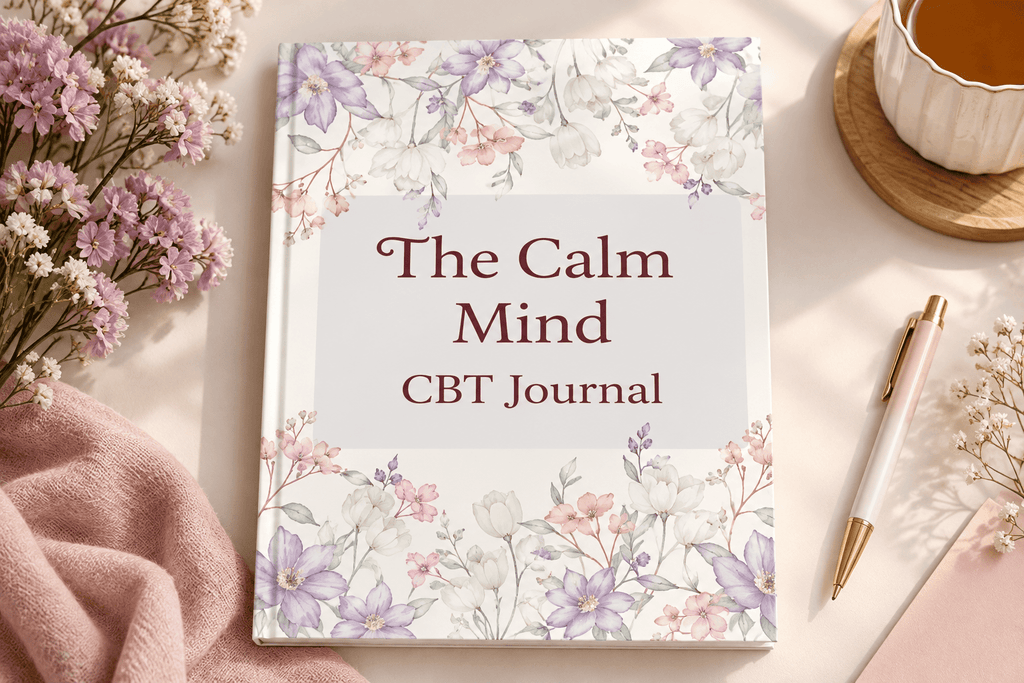
The Calm Mind CBT Journal is a guided, printable journal designed to help you notice your thought patterns, question unhelpful thinking, and explore more balanced perspectives through practical Cognitive Behavioral Therapy (CBT)-inspired exercises.
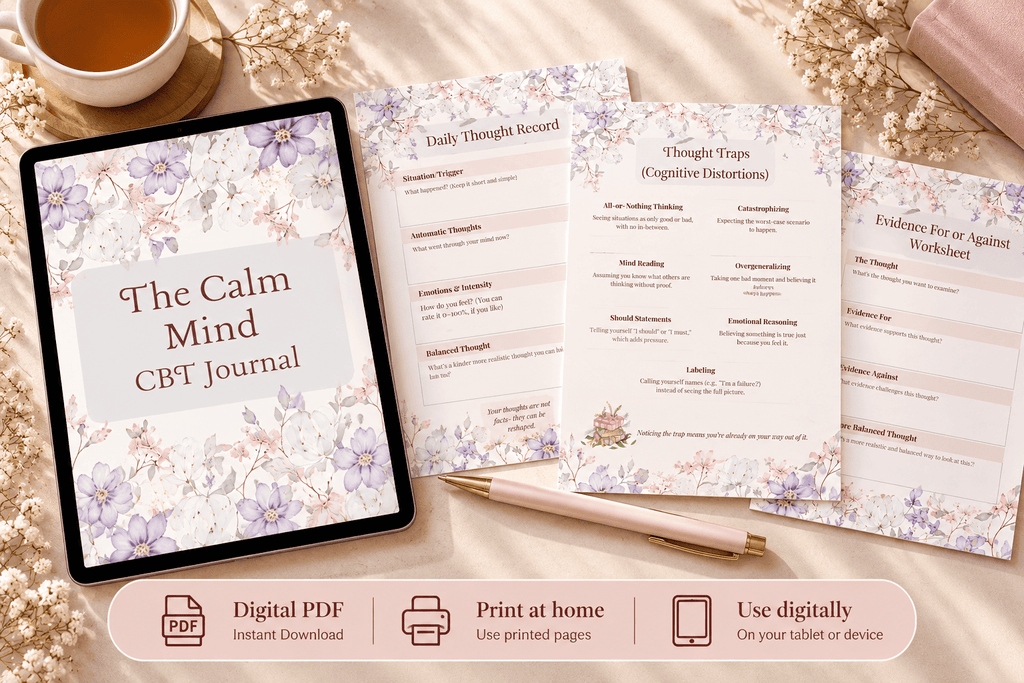
A digital PDF journal for personal reflection and self-help.
Sometimes, It’s Not the Situation. It’s the Story We Tell Ourselves.
Two people can experience the same situation and interpret it completely differently.
A delayed reply might mean someone is busy. But when you’re already worried, your mind might tell you that you’ve done something wrong.
One mistake might feel like proof that you’re not good enough. A difficult day might convince you that nothing is going right.
These thoughts can happen automatically. We don’t always stop to ask whether they’re accurate, whether we’re overlooking something, or whether there’s another possible explanation.
That’s where thoughtful reflection can help.
Instead of trying to force yourself to think positively, you can learn to slow down, look at the situation more carefully, and consider a more balanced perspective.
You don’t have to believe every thought that crosses your mind.
Get to Know Your Thought Patterns
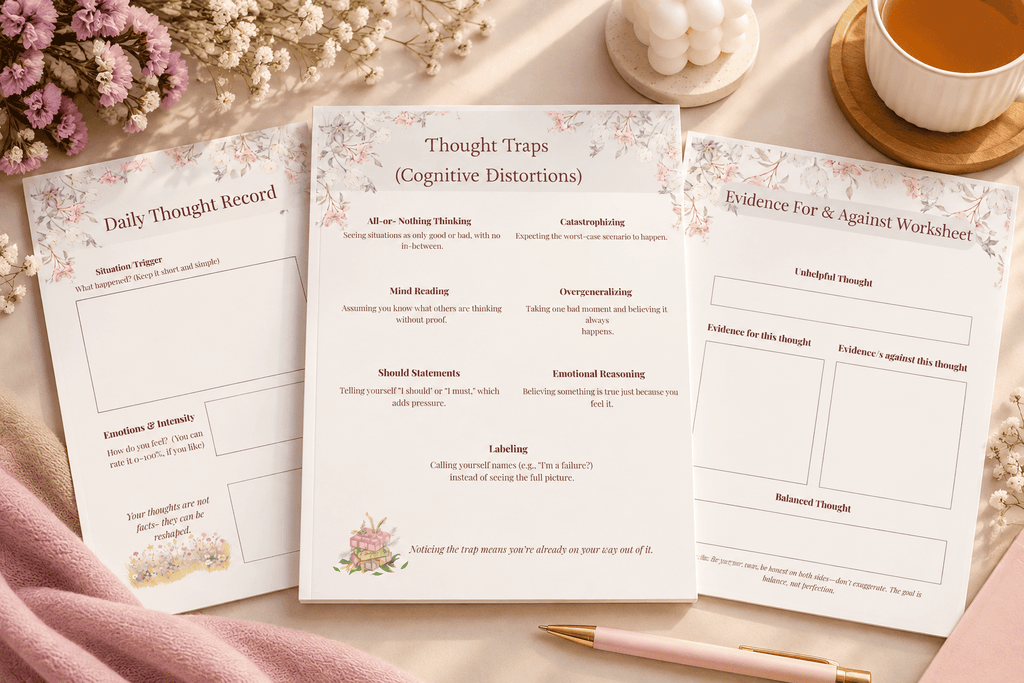
The Calm Mind includes guided worksheets to help you explore the thinking habits that may affect how you feel and respond to everyday situations.
1. Notice the Thoughts That Show Up Automatically
Sometimes, the first thought that comes to mind isn’t the most balanced one.
The Daily Thought Record helps you write down what happened, identify your automatic thoughts, describe your emotions, and consider a kinder, more realistic thought.
Rather than keeping everything in your head, you have a place to work through it on paper.
2. Recognize Your Thought Traps
Have you ever assumed the worst, imagined what someone else must be thinking, or treated one mistake as proof that you always get things wrong?
These are examples of common thinking patterns explored in the journal.
You’ll learn about seven thought traps:
- All-or-nothing thinking
- Catastrophizing
- Mind reading
- Overgeneralizing
- Should statements
- Emotional reasoning
- Labeling
The journal also includes individual worksheets that help you recognize these patterns in your own experiences and practice reframing them.
3. Examine the Evidence Behind a Thought
A thought can feel convincing without telling you the whole story.
The Evidence For & Against Worksheets guide you through writing down the evidence that supports a thought, considering evidence that challenges it, and forming a more balanced alternative.
The goal isn’t to dismiss your feelings or pretend everything is fine. It’s to give yourself room to look at the bigger picture before deciding what a situation means.
4. Explore the Beliefs Beneath Your Thoughts
Some thought patterns may be connected to deeper beliefs about yourself, other people, or the world.
The Core Beliefs section invites you to explore the beliefs that can influence how you think, feel, and behave.
This gives you an opportunity to reflect beyond individual situations and begin noticing patterns that may show up repeatedly.
More Than a Thought Record
The Calm Mind is a 45-page journal with additional sections designed to support reflection, personal growth, and practical planning.
Inside, you’ll find:
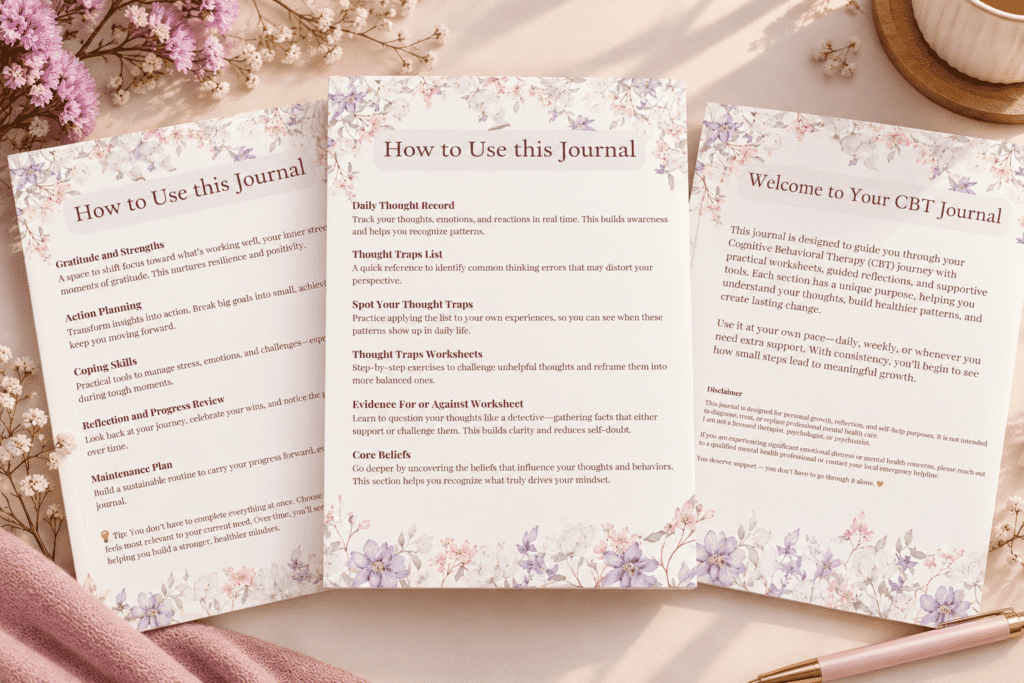
- Daily Thought Records to help you examine situations, automatic thoughts, emotions, and balanced thoughts.
- Thought Traps List for a quick reference to common cognitive distortions.
- Spot Your Thought Traps checklist to help you identify familiar patterns.
- Thought Trap Worksheets with guided questions and exercises.
- Evidence For & Against Worksheets to help you examine thoughts more carefully.
- Core Beliefs exercises for deeper self-reflection.
- Gratitude and Strengths prompts to help you notice what’s working well.
- Action Planning pages to turn insights into small, achievable steps.
- Coping Skills exercises for reflecting on ways to manage stressful moments.
- Reflection and Progress Review pages to look back on your journey.
- Maintenance Plan to help you think about sustaining the habits you’ve developed.
You don’t need to complete every page at once. Choose the section that feels most relevant to what you’re experiencing and work through it at your own pace.
A Journal You Can Return to Whenever You Need It
You might use The Calm Mind after a difficult conversation, when you notice yourself assuming the worst, or when a mistake leaves you questioning yourself.
You might also use it during a quiet moment when you want to understand your reactions a little better.
There is no need to make journaling another task you have to get perfect.
Start with one thought. Answer one question. Consider one alternative perspective.
Small steps count, too.
Is The Calm Mind Right for You?
This journal may be a good fit if you want to:
- Become more aware of your automatic thoughts.
- Recognize common unhelpful thinking patterns.
- Practice examining the evidence behind your assumptions.
- Explore more balanced ways of interpreting situations.
- Reflect on deeper beliefs and recurring patterns.
- Use guided worksheets rather than staring at a blank notebook wondering what to write.
You can use it on its own for personal reflection or alongside support from a qualified mental health professional.
Ready to Explore Your Thoughts Differently?
You don’t have to figure everything out in one sitting.
Give yourself a little space to pause, write things down, and look at your thoughts from another perspective.
The Calm Mind CBT Journal offers guided exercises to help you begin that process, one page at a time.
[GET YOUR COPY OF THE CALM MIND →]
Digital PDF download. Review the Gumroad listing for the price, file details, and purchase information.
A Note Before You Begin
The Calm Mind CBT Journal is intended for personal growth, reflection, and self-help. It is not designed to diagnose or treat a mental health condition or replace professional mental health care. If you’re experiencing significant emotional distress, consider reaching out to a qualified mental health professional.