If your journal is full of half-filled pages, unfinished lists, and spreads you never came back to, I get it. I’ve been there too.
There are days when I want to journal but don’t feel like writing pages about my thoughts and feelings. Sometimes I just want something simple that I can fill out and move on with my day.
That’s why I like journal trackers. Tracking journal ideas can make journaling much easier when you don’t know what to write or simply don’t have much time. You can check a box, color in a square, add a few words, and you’re done.
Over the years of creating journals for The Defined Life, I’ve tried different kinds of trackers. Some I kept using, some I changed, and some I eventually forgot about. But along the way, I found plenty of journal tracking ideas that made my journals more useful and practical.
So I put together 54 tracking journal ideas that you can try in your own journal.
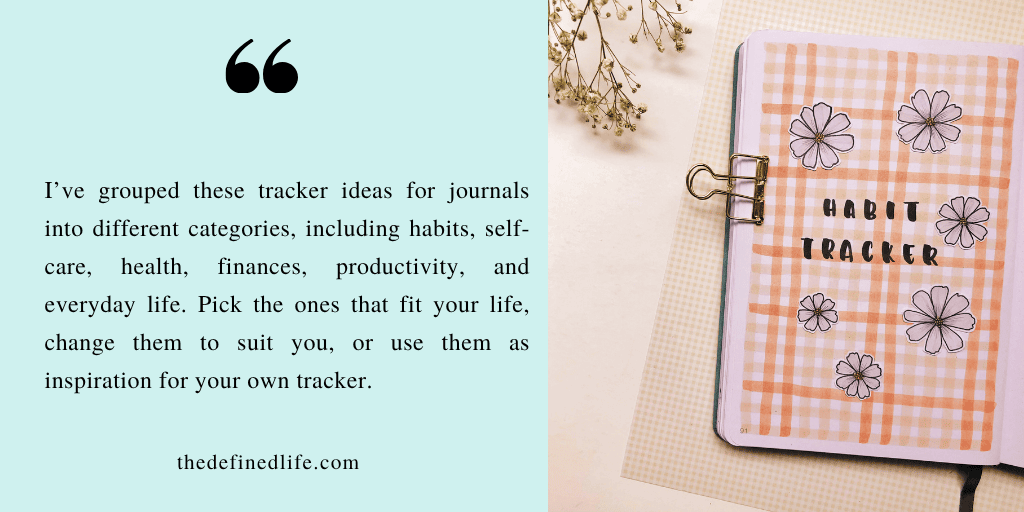
I’ve grouped these tracker ideas for journals into different categories, including habits, self-care, health, finances, productivity, and everyday life. Pick the ones that fit your life, change them to suit you, or use them as inspiration for your own tracker.
You don’t need a complicated journal. Sometimes, a simple tracker is all you need to keep track of the things that matter to you.
Table of Contents
Habit Tracking Journal Ideas
These are the bread and butter of any tracker journal — simple, visual, and weirdly satisfying to fill in.
- Water intake tracker
- Sleep hours tracker
- Morning routine checklist
- Evening wind-down routine
- Screen time tracker
- No-spend day tracker
- Reading streak tracker
- Meditation minutes tracker
- Skincare routine tracker
- Vitamin/supplement tracker
- Steps or movement tracker
- Decluttering streak (one item a day)
- Gratitude practice tracker
- Bible or devotional reading tracker
- Language-learning streak tracker
Mood & Mental Health Tracking Journal Ideas
I keep coming back to mood trackers because they turn “I don’t know, I just feel off” into an actual pattern you can see on paper. (Note: trackers like these are for personal reflection, not a substitute for professional mental health care.)
- Daily mood tracker (color-coded grid)
- Weekly emotion wheel
- Anxiety level tracker
- Energy level tracker
- Sleep quality vs. mood tracker
- Triggers and coping log
- Therapy session notes tracker
- Self-care activities tracker
- Social battery tracker
- Cycle and mood correlation tracker
Find out more self care journal ideas here.
Goal & Productivity Tracking Journal Ideas
- Monthly goal progress bar
- Habit-stacking tracker
- Savings goal thermometer
- Debt payoff tracker
- Business income tracker
- Blog or content posting tracker
- Etsy shop sales tracker
- Project deadline tracker
- Weekly priorities checklist
- “Eat the frog” daily task tracker
- 100-day challenge tracker
- Bucket list progress tracker
Health & Wellness Tracking Journal Ideas
- Workout/exercise tracker
- Meal planning tracker
- Period/cycle tracker
- Symptom tracker (for chronic conditions or allergies)
- Doctor’s appointment log
- Weight or measurements tracker (only if this feels healthy for you!)
- Caffeine intake tracker
- Headache/migraine log
Home & Lifestyle Tracking Journal Ideas
- Cleaning schedule tracker
- Meal prep tracker
- Plant care tracker
- Pet care tracker (feeding, vet visits, walks)
- Birthday and important dates tracker
- Books read this year tracker
- Movies/shows watched tracker
- Travel bucket list tracker
- Gift-giving tracker (who, what, when)
If you also like reading more about journaling, you can head to Journaling Hub to read more helpful journaling topics (please click image below.

How to Actually Use a Tracker (Without Giving Up by Week Two)
A few things I’ve learned the hard way:
- Start with one or two. Trying to track everything at once is how trackers end up abandoned by January 15th.
- Keep it visual. Coloring in a box or filling a bar feels a lot more doable than writing sentences.
- Put it somewhere you’ll actually see it. A tracker buried in the back of your journal doesn’t stand a chance.
- Let it be imperfect. A tracker with three empty days isn’t a failed tracker. It’s just real life.
Bring These Tracking Journal Ideas Into Your Junk Journal
If you’re a junk journal person like me, trackers are one of the easiest ways to make a spread feel both pretty and useful. A washi-taped grid, a few stamped icons, a pocket for loose notes -suddenly your tracker page is something you actually want to open.

If you’d rather skip the grid-drawing and get straight to the filling-in part, I’ve got printable tracker kits over in my Shop that you can drop straight into your junk journal or planner.

Frequently Asked Questions About Tracking Journal Ideas
What is a tracker journal?
A tracker journal is a journal (or section of one) where you log recurring information — habits, moods, goals, health data, and more — using grids, charts, or checklists instead of long-form writing.
What should I track first in a journal?
Start with just one or two trackers tied to something you actually care about right now, like water intake or mood. Trying to track everything at once is the fastest way to abandon the habit.
Are tracker journals good for mental health?
Many people find mood and habit trackers helpful for spotting patterns over time. They’re a reflection tool, though, not a replacement for therapy or medical advice.
Can I use tracker pages in a junk journal?
Yes – tracker grids work great in junk journals when combined with washi tape, stamps, or pockets, turning a functional page into a decorative one too.
Which tracker journal idea are you adding first? I’d love to know in the comments.
Love and light,








[…] might also want to know more tracking journal ideas to […]