Dark Academia Junk Journal Ideas for Book Lovers Who Never Grew Out of It
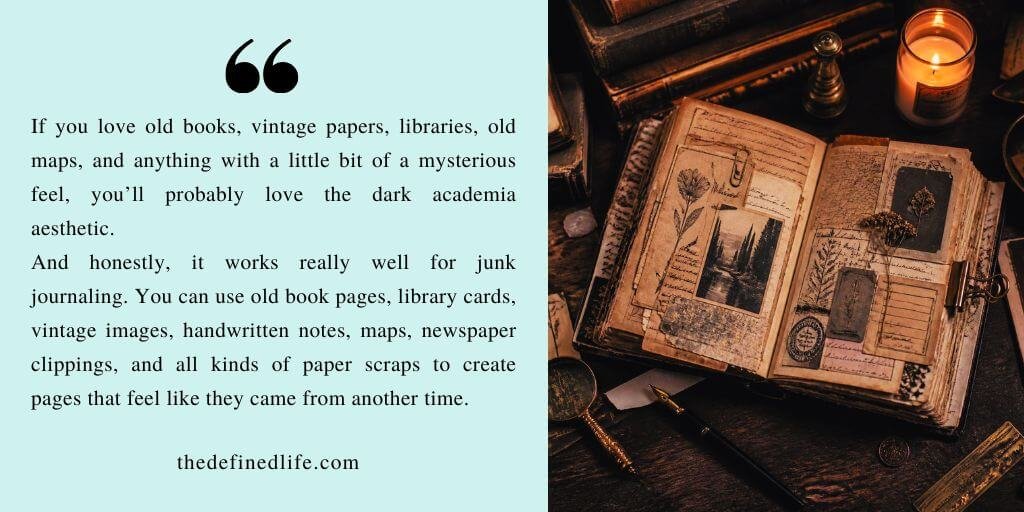
If you love old books, vintage papers, libraries, old maps, and anything with a little bit of a mysterious feel, you’ll probably love the dark academia aesthetic.
And honestly, it works really well for junk journaling. You can use old book pages, library cards, vintage images, handwritten notes, maps, newspaper clippings, and all kinds of paper scraps to create pages that feel like they came from another time.
If you’ve been looking for dark academia junk journal ideas but aren’t sure what to put on your pages, you’re in the right place. From supplies and color ideas to journal themes and page layouts, here are plenty of ideas to help you create your own dark academia junk journal.
Table of Contents
What Is a Dark Academia Junk Journal?
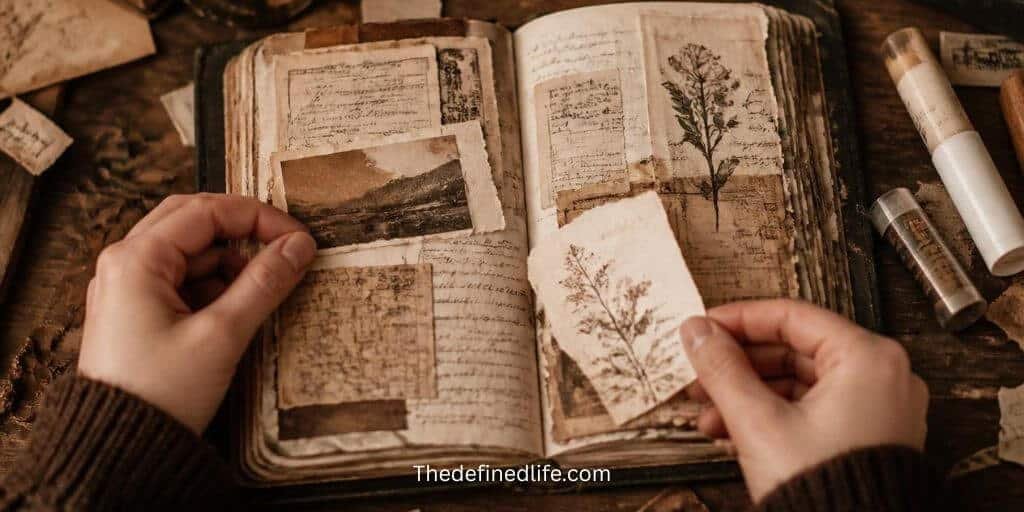
A dark academia junk journal is a themed spread built around the look and feeling of old libraries, classic literature, and academic life from another era. Like worn leather, sepia tones, candlelight, and handwriting that looks like it belongs in a Victorian letter.
It pairs especially well with junk journaling because the aesthetic is already about texture and history like old paper, aged ink, things that look like they’ve been read and reread. You’re not trying to make something look new. You’re trying to make something look like it’s been loved for a hundred years.
A fountain pen or calligraphy pen for that old-world handwriting feel
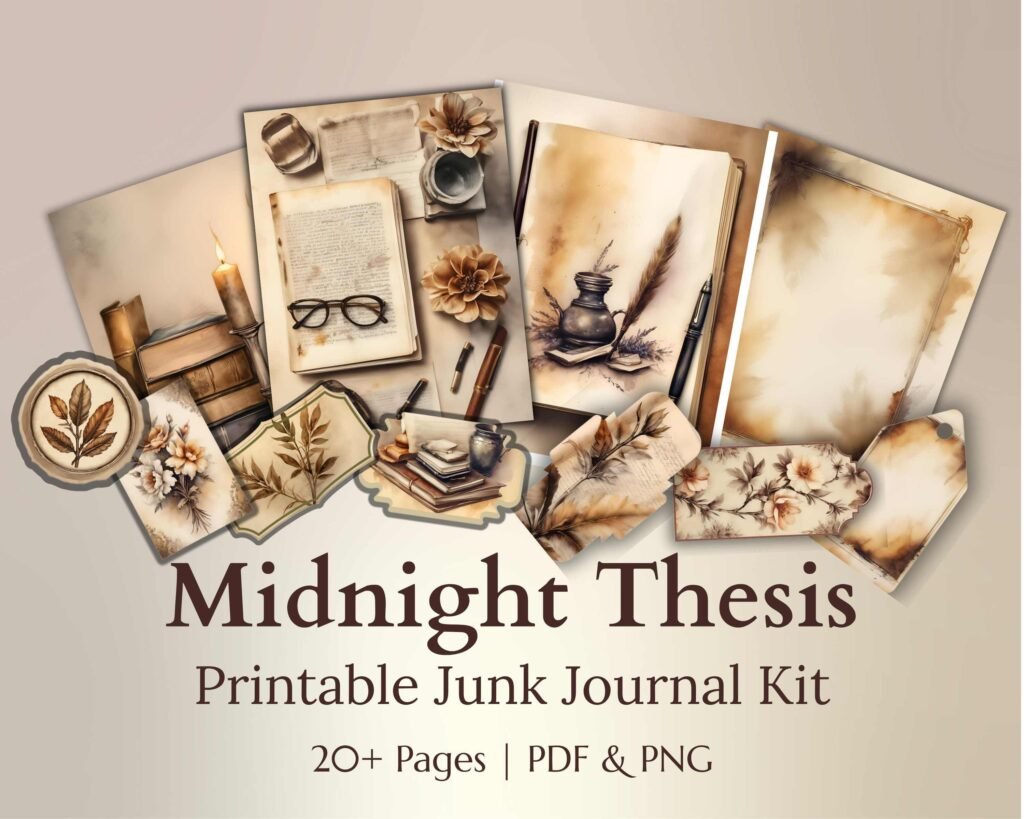
If you’d rather skip the hunt for supplies, I put together aDark Academia Junk Journal Kit with printable ephemera, journal pages, and cards already in this exact mood — so you can start layering pages right away.
The Secret Society – Wax seals, locked drawers, handwritten letters passed in secret.
Classic Literature – Pages built entirely around a single book or author you love.
Autumn Scholar – Falling leaves, wool scarves, tea by the window, the start of a new term.
Check out these free blog posts/tutorials all about journaling. Click image below 🙂
Dark Academia Junk Journal Ideas
Layouts & Textures
Old book page backgrounds – Tear pages from a secondhand book (nothing rare or irreplaceable) and layer them as your base. Text-heavy pages work best.
Tea-stained paper – Steep a tea bag, brush the liquid onto plain paper, and let it dry for instant aging.
Torn edges instead of clean cuts – Rip your paper edges by hand rather than cutting them straight. It reads as older and less polished.
Layered envelopes – Tuck a folded letter or note inside an aged envelope and glue it into the page as a pocket.
Wax seal accents – A small wax seal on a folded note instantly makes a page feel like correspondence from another century.
Handwritten marginalia – Add small notes in the margins, like you’re annotating a book, not just journaling in one.
Sheet music layers – Old hymnal or sheet music pages add texture and a quiet, melancholy feel.
Pressed leaves or botanicals – Autumn leaves, dried florals, even a pressed fern give the page a collected-over-time quality.
Ribbon-tied bundles – Bundle a few small tags or notes together with ribbon and glue the whole bundle onto the page.
Ink blots and splatters – A little deliberate ink texture (dropped from a pen, not a spill) adds authenticity without much effort.
Literary Journaling Prompts
What book changed how you think? – Write about a book that shifted something in you, not just one you enjoyed.
A letter to your favorite author – Real or imagined. What would you actually want to tell them?
The books on your shelf you haven’t read yet – List them. Why are they still waiting?
A quote that’s stayed with you – Copy it out by hand and journal around what it means to you now versus when you first read it.
What you’re currently studying or learning – Doesn’t have to be school. Could be a language, a skill, a subject you got curious about.
Your ideal reading room – Describe it in detail: the chair, the light, the smell of the books.
A character you saw yourself in – What did that character want, and did you ever get it?
The last conversation you wish had gone differently – Dark academia has a melancholy streak. Let a page hold something heavier.
Your intellectual heroes – Writers, thinkers, professors, anyone who shaped how you see the world.
If prompts like these are your favorite part of journaling, you’ll probably enjoy myNight Journaling Prompts too — a lot of the same reflective, slow-down energy.
Ephemera & Decoration Ideas
Vintage postage stamps – Real or printable, they add instant old-world detail.
Library due-date cards – The old-fashioned kind stamped with dates. Easy to recreate or find printable versions of.
Antique map fragments – A torn piece of an old map works beautifully as a background layer.
Typewriter-style text – Either from an actual typewriter or a printable font that mimics one.
Candle wax drips – Carefully drip a little candle wax along a page edge for texture (let it fully cool before turning the page).
Raven, moth, or owl motifs – Small printable or hand-drawn accents that fit the gothic mood without overdoing it.
Old photograph corners – Even without a real vintage photo, the little photo-corner stickers add a scrapbook-from-another-era feel.
Handwritten Latin or Greek phrases – A short phrase in the margin adds atmosphere (look up the translation first so it actually means something to you).
Pocket watches or hourglass images – Small time-themed accents tie into the “romanticizing knowledge and time” feel of the aesthetic.
Quill and inkwell sketches – Simple line drawings in the corners of a page go a long way.
Final Thoughtson Starting a Dark Academia Junk Journal
Dark academia junk journaling isn’t about making every page perfect — it’s about building something that feels like it belongs on a shelf in an old library, half memory and half made-up world. Start with one theme, one small stack of scraps, and let it grow from there.
If you want a head start, myDark Academia Junk Journal Kit has the ephemera and pages already done for you, so you can go straight to layering and writing.
Love and light, Abby
Frequently Asked Questions About Dark Academia Junk Journals
What colors work best for a dark academia junk journal? Deep, muted tones — burgundy, forest green, navy, black, and warm browns. Avoid anything bright or pastel; the whole point is a moody, aged look.
Do I need real old books to make one of these? No. You can use printable ephemera designed to look aged, or you can lightly tea-stain plain paper yourself. Only tear up real secondhand books if you’re comfortable doing so, and never anything rare or irreplaceable.
Is dark academia junk journaling only for students? Not at all. It’s really for anyone who loves the feeling of old libraries, classic literature, and quiet intellectual life — whether that’s tied to school or just a personal love of books and learning.
This website uses cookies to improve your experience. We'll assume you're ok with this, but you can opt-out if you wish. Cookie settingsACCEPT
Privacy & Cookies Policy
Privacy Overview
This website uses cookies to improve your experience while you navigate through the website. Out of these cookies, the cookies that are categorized as necessary are stored on your browser as they are essential for the working of basic functionalities of the website. We also use third-party cookies that help us analyze and understand how you use this website. These cookies will be stored in your browser only with your consent. You also have the option to opt-out of these cookies. But opting out of some of these cookies may have an effect on your browsing experience. Please click this link to read more about our Privacy Policy and Disclaimer.
Necessary cookies are absolutely essential for the website to function properly. This category only includes cookies that ensures basic functionalities and security features of the website. These cookies do not store any personal information.
Any cookies that may not be particularly necessary for the website to function and is used specifically to collect user personal data via analytics, ads, other embedded contents are termed as non-necessary cookies. It is mandatory to procure user consent prior to running these cookies on your website.








Leave a Reply