What to Put in a Junk Journal: 75 Things to Collect and Use
One of the most common questions people ask when they’re starting a junk journal is: what to put in it.
What to put in a junk journal can be overwhelming but it can also be a fun part. I’ve put together 75 things you can collect and use in your junk journal, grouped by category, with tips on how to actually use each one.
You might want to bookmark this post so you can back to it.
Table of Contents
Paper-Based Materials
Paper is the foundation of any junk journal page. The good news is that interesting paper is literally everywhere once you start looking.
1. Old book pages – Torn pages from old paperbacks or hardcovers make beautiful background layers. Look for ones with interesting typography or aged, yellowed paper. Thrift stores usually have old books for under a dollar.
2. Sheet music – Old music sheets have that perfect vintage look. They work especially well as backgrounds for floral or botanical pages.
3. Newspaper clippings – Headlines, crossword puzzles, comics, weather maps – all great for layering. Use older newspapers for a more aged look.
4. Magazine pages – Cut out colors, textures, words, or images that match your theme. Fashion magazines are great for color, older National Geographics are great for nature imagery.
5. Kraft paper – Brown kraft paper is one of the most versatile junk journal materials. It works as a background, a tag, an envelope, or a pocket. You can find it in packaging, paper bags, or buy a roll cheaply.
6. Tissue paper – So good for adding soft, translucent layers to your pages. Save tissue paper from gift bags – the more wrinkled it is, the better it looks.
7. Wrapping paper – Especially floral or vintage-style patterns. Even small scraps are useful for background layers or torn edge details.
8. Paper bags – Brown or white paper bags can be cut up and used as background paper, folded into pockets, or used as tag bases.
9. Cardstock scraps – Great for making tags, labels, or layered elements. Save any leftover cardstock from other crafts.
10. Handwriting paper – Old lined paper, notebook pages, or vintage letter paper. Anything with handwriting on it already is even better – it adds instant character.
11. Graph paper – Adds a great structured texture to pages. Old math notebooks from school are perfect for this.
12. Watercolor paper scraps – If you do any watercolor painting, save the scraps. They make great tags and layering pieces.
13. Old envelopes – Both the outside and inside of envelopes are useful. The inside patterns (those blue and white security prints) are especially beautiful as backgrounds.
14. Junk mail – Flyers, catalogs, and promotional mail are full of interesting typography, colors, and imagery. Go through your recycling before you toss it.
15. Calendar pages – Monthly calendar pages, especially ones with pretty illustrations, make great journal backgrounds. Circle meaningful dates, write over the grid, layer on top.
Ephemera and Collectibles
Ephemera is basically any small, flat paper item that was meant to be temporary – tickets, tags, labels, cards. These are the pieces that give your journal that collected-over-time feeling.
16. Postage stamps – Old or new, used or unused. They add great detail and color to any page.
17. Postcards – Both the front (for imagery) and the back (for the handwriting and postmarks). Check thrift stores and antique shops.
18. Greeting cards – Old birthday, Christmas, or Valentine’s cards. Cut them up or use them whole as a page element.
19. Ticket stubs – Movie tickets, concert tickets, event tickets. These are little time capsules of your own life.
20. Receipts – Especially from meaningful outings – a nice dinner, a trip, a bookstore visit. They add a personal, documentary feel.
21. Business cards – Vintage or interesting business cards add great typography and texture.
22. Playing cards – Old playing cards with worn edges are perfect junk journal ephemera. Use them as tags or pockets.
23. Bookmarks – Old bookmarks, especially illustrated ones, work beautifully as layering elements.
24. Washi tape scraps – Even tiny scraps of washi tape are useful for borders, accents, or holding things down.
25. Price tags and labels – Vintage price tags from thrift stores, labels from food packaging, sticker tags from products. All great as ephemera.
26. Tea bag wrappers – The small paper wrappers from tea bags have a delicate, translucent quality that’s really lovely on pages.
27. Bottle caps – If you want some dimension, bottle caps can be glued down flat. They add a fun, eclectic touch.
28. Postmarks and rubber stamps – Stamped imagery, especially vintage postal stamps, adds instant character.
29. Fortune cookie slips – Save the little paper fortunes! They’re perfect for tucking into pockets or layering into pages.
30. Old ID cards or library cards – Vintage membership cards, library cards, and IDs are amazing ephemera. Check antique shops or estate sales.
Natural Materials
Nature is full of free junk journal supplies. Spring and summer are especially good times to gather these.
31. Pressed flowers – Press them yourself in a heavy book for about a week. Even cheap grocery store flowers work beautifully.
32. Pressed leaves – Fall leaves are obvious, but spring and summer leaves work too. Press them the same way as flowers.
33. Dried herbs – Lavender, rosemary, chamomile – dried herbs add texture, subtle color, and even a faint scent to your pages.
34. Twigs and small branches – Tiny, flat twigs can be glued down as decorative elements, especially for nature-themed pages.
35. Feathers – Lightweight and beautiful. Look for them on walks – just check if they’re safe to collect in your area first.
36. Small pebbles or shells – For pages where you want a little dimension. Glue them down flat or tuck them into pockets.
37. Seed packets – The whole packet, front and back, is great ephemera. Tear them open and use everything – the paper, the illustrations, even the seeds if you want texture.
38. Bark rubbings – Place thin paper over tree bark and rub a pencil or crayon over it. Instant natural texture for your pages.
39. Leaf rubbings – Same idea as bark rubbings but with leaves. Great for adding subtle botanical shapes to backgrounds.
40. Dried citrus slices – Dried orange or lemon slices add beautiful color and texture, especially for cottage-style pages.
Fabric and Textiles
A little fabric goes a long way in junk journaling. You don’t need much, even tiny scraps add warmth and texture.
41. Lace scraps – Lace is one of the most popular junk journal materials. Even a small strip along the edge of a page looks beautiful.
42. Burlap – Adds a rustic, earthy texture. Cut it into small pieces for layering.
43. Ribbon – Use as borders, ties for pockets, or decorative elements. The velvet ribbon is especially nice.
44. Old buttons – Sew or glue them onto pages for dimension and a handmade feel.
45. Fabric scraps – Any small pieces of patterned or textured fabric. Florals, plaids, and vintage prints work especially well.
46. Linen or muslin scraps – Neutral fabric scraps that work as a soft background layer, especially under handwriting.
47. Old handkerchiefs – Vintage hankies with embroidery or lace edges are gorgeous junk journal materials. Check thrift stores.
48. Twine or string – Use for stitching pages, tying bundles of ephemera, or as a decorative border.
49. Cheesecloth – The open weave texture of cheesecloth looks incredible when layered over paper. Dye it with tea for an aged look.
50. Doilies – Paper or fabric doilies add instant vintage charm. Use them as backgrounds or layering elements.
Packaging and Everyday Items
This is where junk journaling gets really fun, turning everyday packaging into beautiful journal materials. Before you throw something away, ask yourself: could this go in my journal?
51. Tea boxes – The cardboard from tea boxes is perfect for making tags, covers, or sturdy page bases.
52. Food packaging – Interesting labels, boxes, and wrappers. Vintage-style food packaging is especially beautiful.
53. Candy wrappers – Foil wrappers, pretty paper wrappers, anything with interesting color or texture.
54. Wine or bottle labels – Soak them off the bottle and let them dry. They make gorgeous ephemera.
55. Cereal box cardboard – The inside (plain grey cardboard) is perfect for making tags and pockets. Sturdy and free.
56. Paper straws – Cut up paper straws for colorful, geometric embellishments.
57. Tissue box panels – The side panels of tissue boxes often have pretty patterns or solid colors that work well as layering paper.
58. Gift bags – Cut up old gift bags for patterned paper. The handles can be used as ties.
59. Coffee cup sleeves – The cardboard sleeve from a coffee cup is already the perfect tag shape. Write on it, stamp it, decorate it.
60. Paper napkins – Printed paper napkins can be separated into layers and used for decoupage or delicate background textures.
Printables and Digital Elements
Sometimes you want a specific look that’s hard to find in physical materials. That’s where printables come in.
61. Vintage botanical illustrations – Printable botanical art is everywhere online, and it’s one of the most versatile junk journal additions. Print on regular paper or cardstock, then tear the edges for a more organic look.
62. Vintage maps – Print old maps for backgrounds or torn map pieces as layering elements.
63. Handwriting fonts – Print text in a script or vintage font to use as journaling prompts, titles, or background text.
64. Vintage labels and tags – Free printable vintage labels are great for adding detail to pages without spending anything.
65. Collage sheets – Printable collage sheets give you a whole page of coordinated ephemera in one print. Great for themed pages.
66. Journal prompts – Print a set of journaling prompts and tuck them into a pocket page so you always have something to write about.
67. Monthly calendars – Print a simple calendar page and incorporate it into your spread as a tracker or memory-keeping element.
68. Vintage postage stamp sheets – Printable stamp sheets look incredibly realistic and are so much easier than hunting for real ones.
69. Watercolor backgrounds – Print a soft watercolor wash as a ready-made background layer. So useful when you want color without the mess.
70. Coordinated kit elements – If you want your pages to feel cohesive without spending hours coordinating materials, a printable junk journal kit gives you everything in one place – papers, ephemera, tags, and more, all designed to work together.
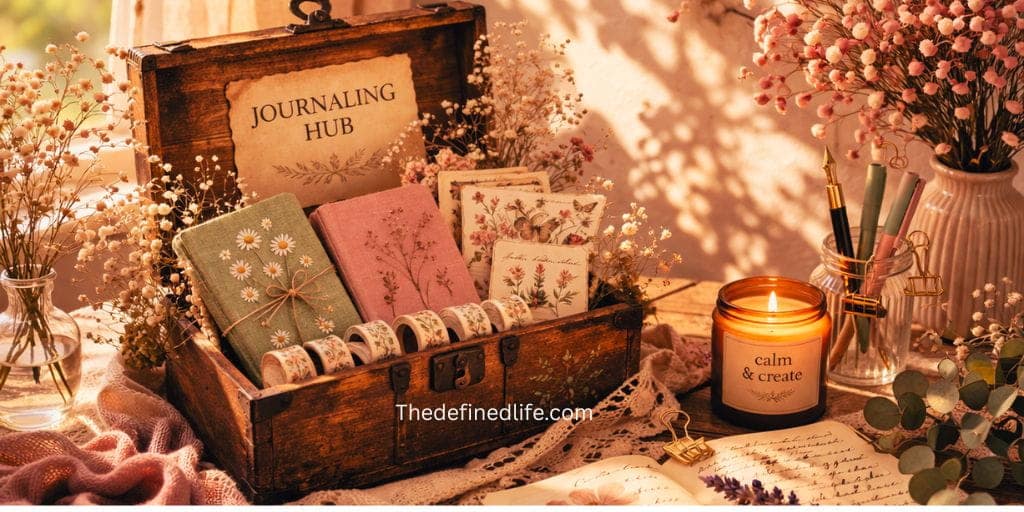
Your journal is a time capsule of who you are today. My mission at The Defined Life is to give you the kits, prompts, and inspiration to make that capsule look and feel exactly like you. Explore the journaling hub and let’s get creative together.
click this image to access the journaling hub.
Inks, Paints, and Finishing Touches
These aren’t things you “collect” exactly, but they’re what pulls your pages together.
71. Distress ink – Dabbing distress ink around the edges of paper gives it that perfectly aged, worn look. Brown and black are the most used colors.
72. Watercolor paints – A simple watercolor wash as a background layer transforms plain paper into something beautiful.
73. Rubber stamps – Stamps add detail, texture, and interest to any page. Vintage, botanical, and text stamps are the most versatile.
74. Wax seals – A wax seal adds an instant vintage, elevated touch to pages, envelopes, or tags.
75. Pen and ink – Sometimes the most beautiful thing you can add to a junk journal page is your own handwriting. A good pen makes a difference. Try a fine-tipped black pen for journaling and a brush pen for titles.
Where to Find All of This Stuff
You probably already have more junk journal supplies than you realize. Here’s where to look:
Your own house – Go through your recycling, your junk drawer, your bookshelves, and your craft supplies before you buy anything new.
Thrift stores – Books, fabric, buttons, vintage ephemera, old frames, hankies. Thrift stores are junk journal goldmines.
Dollar stores – Washi tape, cardstock, tissue paper, stickers, ribbon, and sometimes even stamps.
Garden centers – Seed packets, plant tags, and pretty packaging.
Your recycling bin – Packaging, junk mail, cardboard, tissue paper. Seriously, check before you recycle.
Nature – On any walk outside. Flowers, leaves, feathers, interesting pebbles.
Want to Skip the Hunting? Try the Free Sampler First
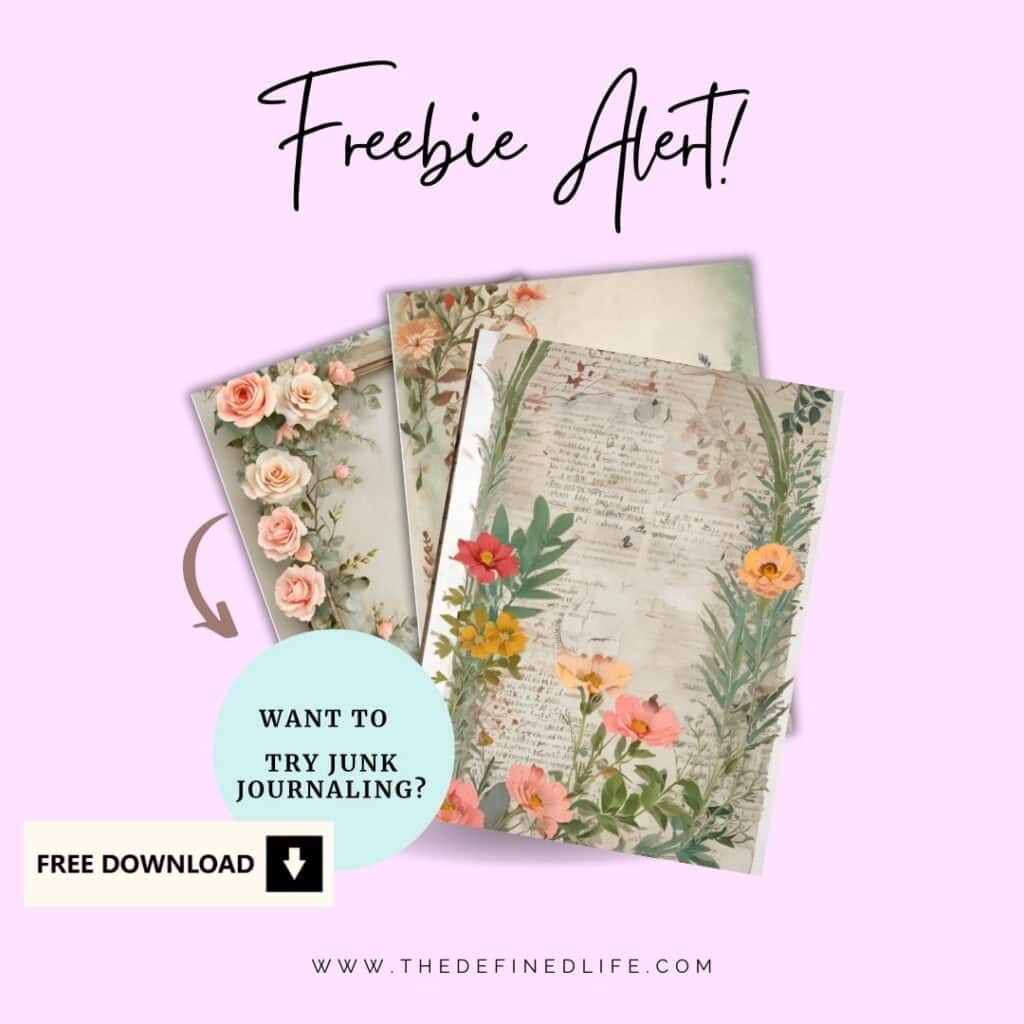
If you love the idea of having beautiful, coordinated materials without spending hours collecting and prepping everything, my Botanical Junk Journal Kit might be exactly what you need.
It includes vintage botanical ephemera, layering papers, tags, and collage elements – all printable, all designed to work together. You print what you need, cut it out, and get straight to the fun part.
For starting your junk journal with ease, you can browse from my shop and see different kinds of junk journal kits.
The best way to build up your junk journal stash is to just start noticing things. Once you start looking at everyday objects as potential journal materials, you’ll never throw anything away the same way again.
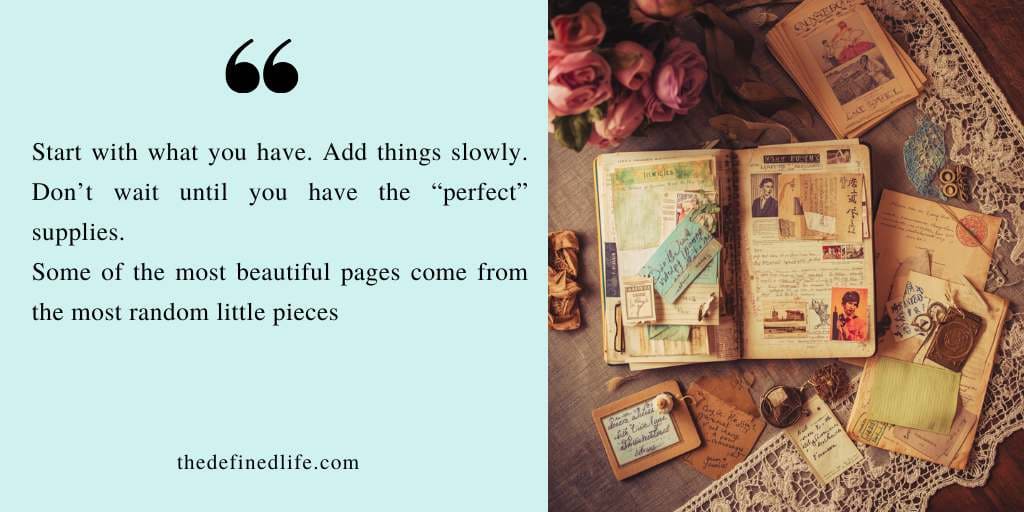
Start with what you have at home, add to it slowly, and don’t worry about having the “right” supplies. The most interesting junk journal pages are usually made from the most unexpected things.
This website uses cookies to improve your experience. We'll assume you're ok with this, but you can opt-out if you wish. Cookie settingsACCEPT
Privacy & Cookies Policy
Privacy Overview
This website uses cookies to improve your experience while you navigate through the website. Out of these cookies, the cookies that are categorized as necessary are stored on your browser as they are essential for the working of basic functionalities of the website. We also use third-party cookies that help us analyze and understand how you use this website. These cookies will be stored in your browser only with your consent. You also have the option to opt-out of these cookies. But opting out of some of these cookies may have an effect on your browsing experience. Please click this link to read more about our Privacy Policy and Disclaimer.
Necessary cookies are absolutely essential for the website to function properly. This category only includes cookies that ensures basic functionalities and security features of the website. These cookies do not store any personal information.
Any cookies that may not be particularly necessary for the website to function and is used specifically to collect user personal data via analytics, ads, other embedded contents are termed as non-necessary cookies. It is mandatory to procure user consent prior to running these cookies on your website.








Leave a Reply