There’s something about the last week of December that makes you want to slow down and think about the year that’s almost over. The holidays are winding down, the house may still be a little messy, and you start thinking about what you want to change when January comes.
I know how easy it is to start the new year with so many plans and goals, only to lose motivation a few weeks later. I’ve learned that sometimes, we don’t need another long list of resolutions. We just need a little time to reflect and figure out what really matters.
That’s why I like doing a year-end reset before making plans for the new year. It’s a simple way to look back on what happened, recognize what you’ve learned, and let go of things you don’t want to carry into another year.
These 30 New Year reset journal prompts will help you reflect on the past year, clear your mind, and prepare for a fresh start. You don’t need a fancy journal or a lot of time. Just grab a notebook, find a quiet moment, and start writing.
Table of Contents
What Is a New Year Reset (and Why Journal It)?
A new year reset is a short pause between the old year and the new one. Instead of jumping straight into goals, you take stock first: what happened, what you learned, what you’re tired of carrying, and what you actually want more of.
Journaling is a good fit because writing slows your thoughts down. Things that feel like one big blur in your head become clearer once they’re on paper. Sometimes, I’lll often catch myself writing something I didn’t know I felt.
How to Use These Prompts
There’s no right way to do this, but these few things help:
Pick a pace that fits your week. You can do one section a day over five days, or one prompt each morning for 30 days. If you’re short on time, even three or four prompts is a good reset.
Write the first honest answer. Don’t edit yourself while you write. Short answers are fine.
Skip what doesn’t land. If a prompt feels too heavy today, move on and come back later.
Date your pages. In a year, reading your answers is surprisingly fun.
If you’re still building the habit, my guide to everyday journaling can help you get started.
Part 1: Look Back on the Year
Start by simply noticing. You’re not grading the year here, just reviewing it.
What moments from this year am I most proud of, even the small ones?
What was the hardest part of this year, and what did it teach me?
Who made this year better, and have I told them?
Where did most of my time and energy go? Was it worth it?
What did I say yes to that I wish I’d said no to?
What surprised me about myself this year?
If I had to describe this year in one sentence, what would it be?
Part 2: Let Go of What’s Heavy
This is the part that makes a reset feel like a reset. Be gentle with yourself, but be honest.
What am I still carrying from this year that I don’t need in the next one?
Which habit is taking more from me than it gives?
What expectations, from others or from myself, am I ready to put down?
Is there anyone I need to forgive, including myself?
What do I keep putting off, and what’s the real reason?
What would I do differently if I weren’t worried about disappointing anyone?
Part 3: Reset Your Everyday Life
Big change usually starts with small, ordinary things. Look at your regular days before you dream about anything bigger.
What does a good, ordinary day look like for me right now?
Which part of my morning or evening routine needs a reset?
What is one small habit that would make the biggest difference?
Does my home reflect how I want to feel? What’s one thing I could change?
Where in my week do I need more rest?
What am I spending money or time on that doesn’t match what I value?
Part 4: Picture the Year Ahead
Now you can look forward, with a clearer head than you had a few pages ago.
How do I want to feel on December 31 next year?
What does my future self know or do that I’m still learning?
Which area of my life needs the most care next year, and what is a first small step?
What would make next year feel lighter?
If everything went well, what would an ordinary Tuesday look like a year from now?
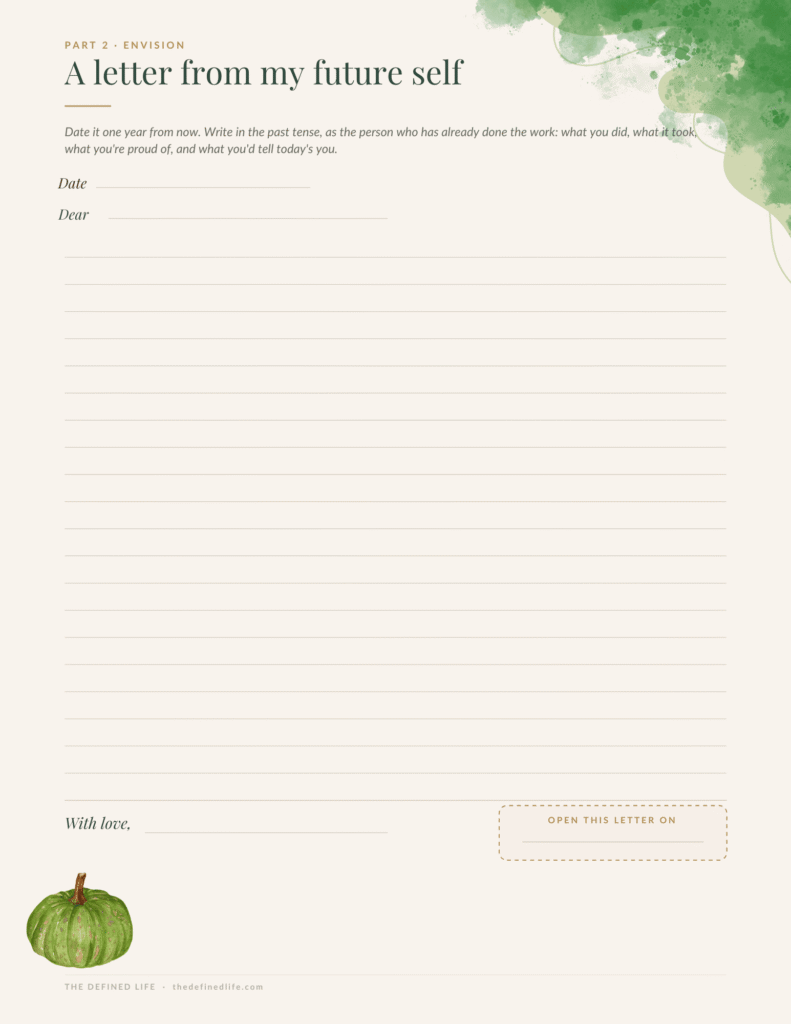
Write a short letter to myself from one year in the future. What do I want to thank myself for?
If You Want to Go a Little Deeper
Prompts 20 to 25 are my favorite, because picturing your future self makes today’s choices easier. If you enjoy that kind of reflection, I put together a full guide for it: the Future Self Vision Board & Journaling Workbook.
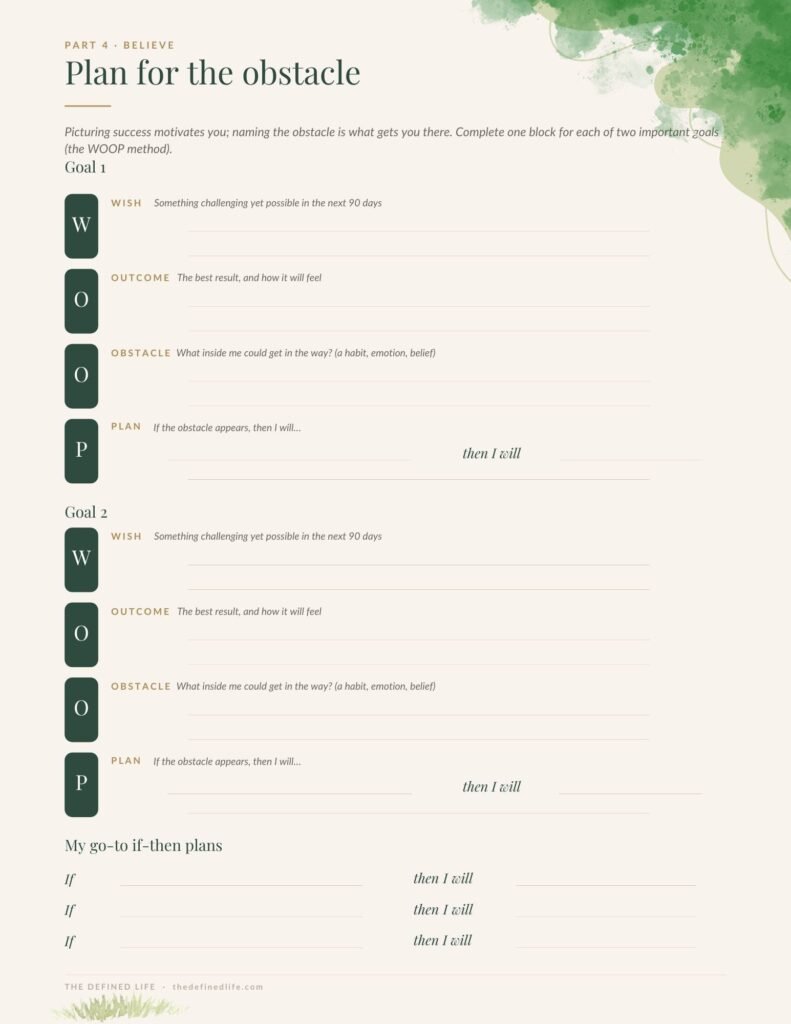
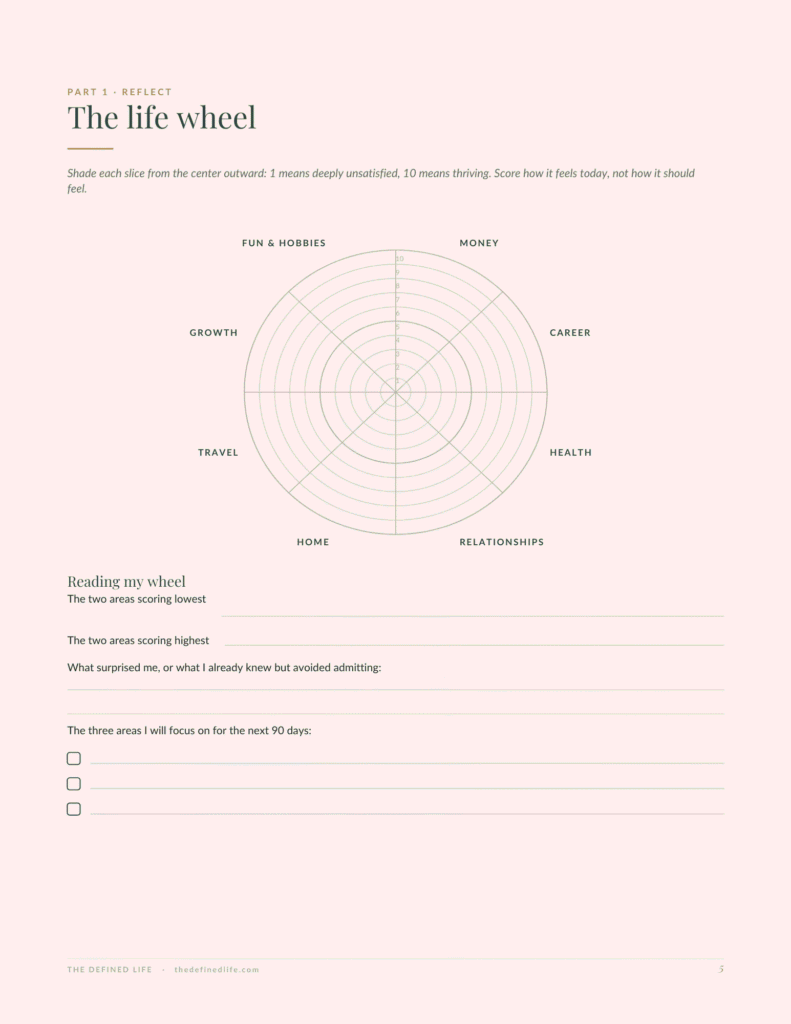
It’s a 38-page printable that walks you through a 90-day plan in six parts: reflecting on where you are, picturing your future self, designing eight areas of your life, working through limiting beliefs, planning your next 90 days, and building a vision board. It also has a life wheel, a letter from your future self, and weekly and monthly review pages you can print again and again. It’s GoodNotes-friendly too, so you can write in it digitally.
You can absolutely do this whole post with just a notebook. The workbook is simply there if you’d like more structure after your reset.
Part 5: Set Gentle Intentions
Instead of a long list of resolutions, try choosing just a few things to lean on.
What one word do I want to carry with me into the new year?
What are my three non-negotiables for taking care of myself?
Who do I want to spend more time with?
What do I want to learn or try, just because I’m curious?
What is one small thing I can do in the first week of January to start?
How to Keep Your Reset Going in January
A reset only helps if something carries over into the new year. A few ideas:
Reread your answers on January 1. Underline anything that surprised you.
Turn one answer into one action. Not ten. Just one thing you can start this week.
Check in monthly. Set a reminder to reread your reset pages on the first of each month.
Keep journaling light. Two or three sentences a day still counts.
If you’d like a structured way to follow through, my Future Self Vision Board & Journaling Workbook includes weekly reviews and a 90-day check-in so your plans don’t get lost by February.
Anytime between Christmas and the first week of January works well. Some people prefer starting in mid-December so they enter the new year already feeling clear.
How many prompts should I answer in one sitting?
Five to seven is a comfortable amount. More than that and it can start to feel like homework.
What if I don’t have much time?
Pick one prompt from each part. That’s five questions and about 15 minutes.
Do I need to answer every prompt?
No. Keep what helps and skip the rest.
Final Thoughts on these New Year Reset Journal Prompts
You don’t need a perfect plan to start a new year well. Sometimes the most helpful thing is to pause, be honest about where you’ve been, and decide what you’d like to carry forward.
I hope these new year reset journal prompts give you a calm, clear start. Grab your notebook, pick a prompt, and begin wherever feels easiest.
This website uses cookies to improve your experience. We'll assume you're ok with this, but you can opt-out if you wish. Cookie settingsACCEPT
Privacy & Cookies Policy
Privacy Overview
This website uses cookies to improve your experience while you navigate through the website. Out of these cookies, the cookies that are categorized as necessary are stored on your browser as they are essential for the working of basic functionalities of the website. We also use third-party cookies that help us analyze and understand how you use this website. These cookies will be stored in your browser only with your consent. You also have the option to opt-out of these cookies. But opting out of some of these cookies may have an effect on your browsing experience. Please click this link to read more about our Privacy Policy and Disclaimer.
Necessary cookies are absolutely essential for the website to function properly. This category only includes cookies that ensures basic functionalities and security features of the website. These cookies do not store any personal information.
Any cookies that may not be particularly necessary for the website to function and is used specifically to collect user personal data via analytics, ads, other embedded contents are termed as non-necessary cookies. It is mandatory to procure user consent prior to running these cookies on your website.














Leave a Reply